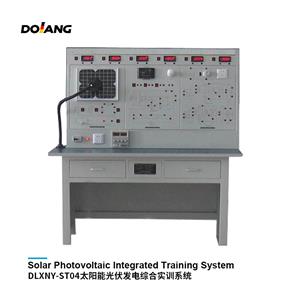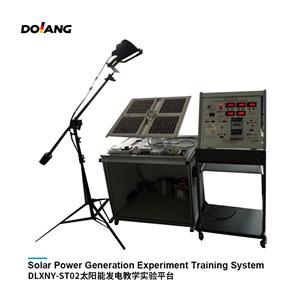
Item.2 DL-ZLDR03 Refrigerator Training System (including software, computer, and UPS)
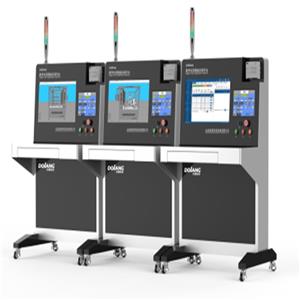
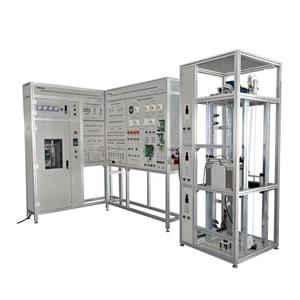
Image for reference only.
1. Scope of Supply
The Contractor shall supply, deliver, install, test, commission, and hand over complete Refrigerator Training System, including:
· Training bench with full refrigeration circuit
· Integrated data acquisition system
· Licensed data acquisition software
· RFID power management system
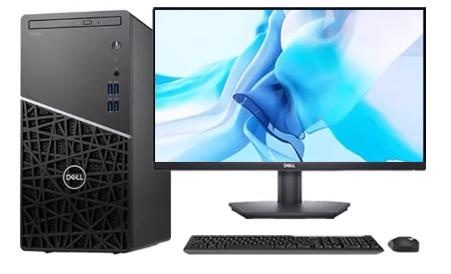
· Branded desktop computer
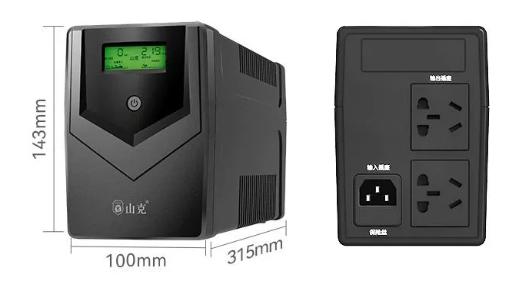
· Offline UPS
· All instruments, accessories, and documentation
The system shall be complete, fully operational, and ready for instructional use.
2. General Description
The Refrigerator Training System shall be a desktop-type educational unit designed for laboratory study of refrigeration thermodynamics and system performance analysis.
The system shall enable students to:
· Observe and analyze refrigeration cycle stages
· Plot and interpret pressure–enthalpy (P–h) diagrams
· Determine superheating and subcooling
· Calculate coefficient of performance (COP)
· Compare actual cycle performance with inverse Carnot cycle
· Evaluate compressor efficiencies
The refrigerant shall be R134a or equivalent environmentally acceptable refrigerant.
3. Mechanical Construction
3.1 Training Bench
· Movable aluminum profile structure
· Dimensions
1280 (L) × 700 (W) × 1650 (H) mm
· Mounted on four (4) castors:
o Two (2) with brakes
o Two (2) without brakes
· Front demonstration board:
o Silkscreened refrigeration circuit diagram
o Clearly labeled components
o Color-coded refrigerant piping (red/blue)
4. Electrical Requirements
· Power Supply: 220V ±10%, Single Phase, 50Hz
· Rated Current: 10A
· Residual Current Circuit Breaker (16A)
· Key switch (self-locking)
· Emergency stop button (self-locking)
· Overload protector (5A)
· Indicator lights (5 pcs)
· Power monitoring module
5. Refrigeration System Components
The system shall include, but not be limited to, the following:
5.1 Compressor
· Capacity: 1/8 HP
· Displacement: approx. 4 cm³
· Cooling capacity: approx. 329W (per EN 12900 standard)
5.2 Condenser with Water Tank
· Spiral copper coil (12–14 turns)
· 1/4-inch outer diameter tubing
· Submerged in water tank
· Heat transfer area approx. 0.082 m²
5.3 Evaporator with Water Tank
· Spiral copper coil (7–9 turns)
· Minimum 1/4-inch outer diameter tubing
· Submerged in water tank
· Heat transfer area approx. 0.049 m²
5.4 Circulating Pumps
· Voltage: 220V ±10%
· Power: 165W (Minimum)
· Adjustable (three power settings)
· Flow rate: approx. 80 L/min
· Quantity: 2 pcs
5.5 Expansion Valve
· Internal balance thermostatic expansion valve (TEV)
5.6 Filter-Dryer
· 1/4" service connections
5.7 Service and Manual Valves
· Flared thread connection
· 1/4" pipe diameter
5.8 Sight Glasses
· Installed on liquid line, suction line, and evaporator inlet (3 pcs)
6. Instrumentation and Sensors
The system shall include:
· Low-pressure gauge: -30 ~ 260 psi
· High-pressure gauge: -30 ~ 550 psi
· Pressure transmitters: 0–2 MPa (4–20 mA output) – 2 pcs
· Temperature transmitters (PT100) – 4 pcs
· Digital thermometers (-40°C to +90°C) – 4 pcs
· Pointer voltmeter (0–250V)
· Pointer ammeter (0–5A)
· LCD display for real-time measurement display
· Analog input module
· Power monitoring module
· High/low pressure controller
Pressure and temperature shall be measurable at multiple points throughout the refrigeration circuit.
7. Water Tank and Heat Exchange System
· Evaporator and condenser coils shall be submerged in separate water tanks.
· Water tank temperature sensor shall be provided.
· Circulating system shall allow water circulation between tanks during steady-state experiments.
· System shall allow demonstration of cooling and heat pump cycles.
8. Integrated Data Acquisition System
The system shall include a built-in multi-functional data acquisition system with the following minimum specifications:
· USB interface connection to computer
· Real-time data acquisition
· High-precision measurement capability
· Manual and automatic data recording
· Configurable sampling intervals (time or interval-based)
· Digital and analog instrument display modes
· User-friendly graphical interface
· Customizable layout and display
All necessary USB cables shall be supplied.
9. RFID Power Management System (Mandatory)
The equipment shall include an integrated RFID-based power control system with:
· Operating frequency: 13.56 MHz (high frequency)
· Communication via RS485 (Standard)
· OLED display for RFID card information
· Audible status prompts
· LED indicators
· Data verification capability
· Parameter configuration via software
· ISO-15693 protocol compliance
· Support for ModBus_TCP and ModBus_RTU
The RFID system shall control power activation via card authentication.
10. Additional Equipment
10.1 Branded Desktop Computer
Brand: HP, Dell or equivalent approved brand
Manufacturer reference:
Minimum specifications:
· Processor: Intel Core i5 (10th Generation or higher)
· Cache: Minimum 12MB
· Base frequency: 2.5 GHz or higher
· RAM: 8GB DDR4
· Storage: 1TB SATA HDD or better
· Graphics: Integrated
· Monitor: 21.5-inch minimum
· Resolution: Minimum 1366 × 768
· Interfaces: VGA ×1, HDMI ×1
· Keyboard and mouse: USB, same brand
· Operating system: Free-DOS or equivalent
10.2 Uninterruptible Power Supply (UPS)
· Type: Offline UPS
· Capacity: 650VA
· Backup time:10 minutes at full load
· Support: 1 computer + 1 monitor
11. Learning Capabilities
The system shall support the following laboratory exercises:
1. Use of pressure–enthalpy charts
2. Determination of superheat and subcooling
3. Refrigeration energy balance
4. Calculation of Coefficient of Performance (COP)
5. Determination of isentropic and volumetric efficiencies
6. Influence of heat source and sink temperatures on COP
7. Comparison between actual cycle and inverse Carnot cycle